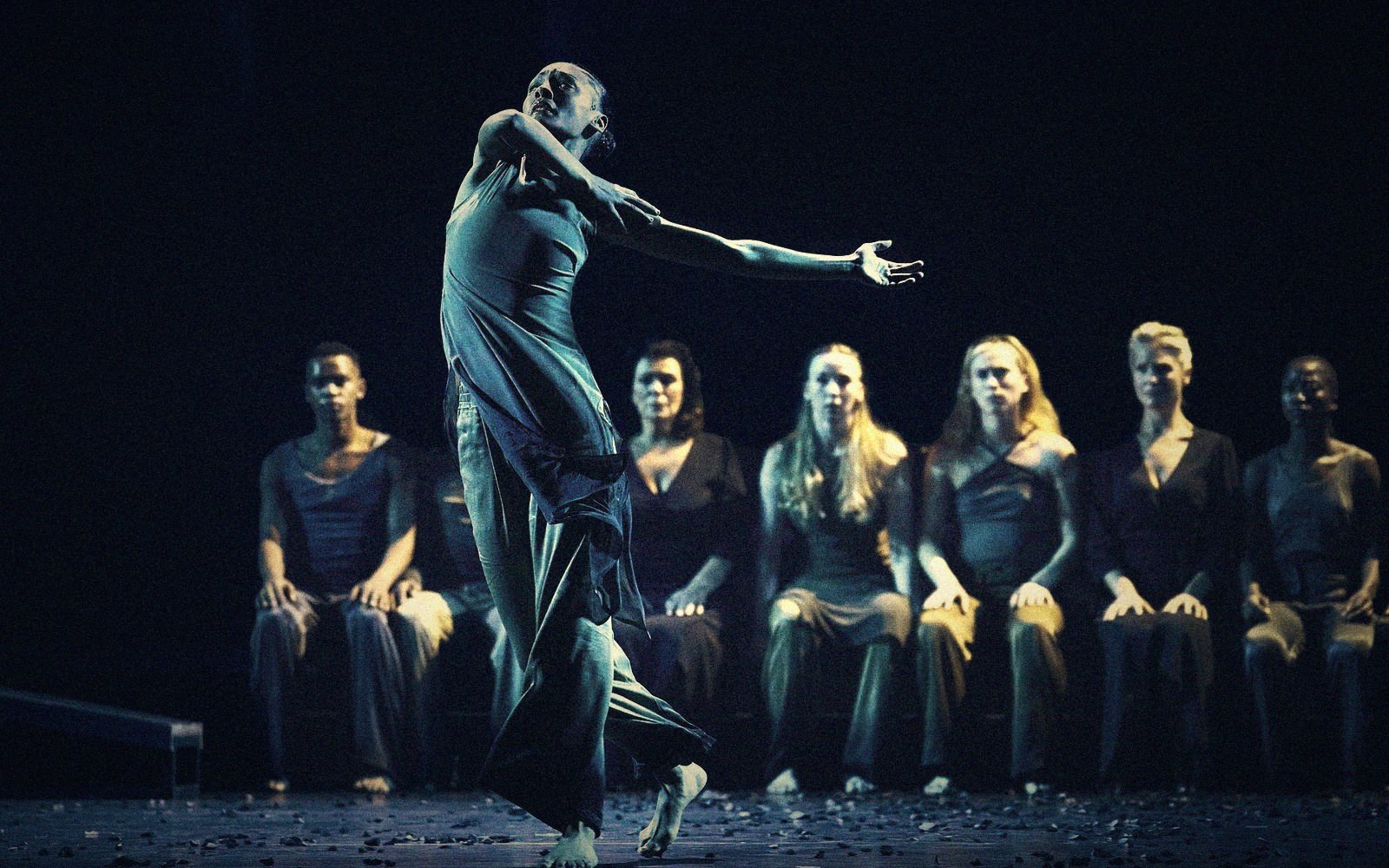
When stopping is the point
A musical number does not interrupt the film. It is the film, briefly running at a different register — and that difference is the argument. The book-scene that precedes it can only tell you where a character stands; the number shows you the interior weather they have been concealing, or denying, or building toward without permission from the plot.
"I'm Still Here" in Follies works this way on stage, and every screen adaptation of a Sondheim score that has tried to domesticate the songs into realistic underscoring has learned the same lesson the hard way: the number needs room to be strange. It needs the audience to notice that ordinary causality has been suspended. That noticing is not a flaw to engineer around — it is the genre's primary mechanism.
The switch into number is a formal declaration that the film trusts its own register enough to stop pretending. When Dorothy reaches "Somewhere Over the Rainbow" in The Wizard of Oz (1939), the song does not illustrate longing already made plain in dialogue. It argues for a specific quality of longing — diffuse, directionless, too large for Kansas — that the script's literal lines could not carry. The camera holds, the cut rate falls, and something is said that could only be said this way.
The plot stops and the number says what the dialogue would not.
The genres that borrow the number without committing to the form tend to misuse it. They write the song to confirm what the dialogue has already told us, and then they wonder why it feels redundant. But a number earns its suspension of narrative precisely by saying the thing no scene before it could — by being, in miniature, what melodrama is as a form: heightened, externalized, morally legible in ways realistic conversation refuses to be.
What the number cannot do is replace argument. It can only make one. If the film has not built the pressure that the song releases, the audience sits politely outside the music rather than inside it. The number becomes spectacle. Spectacle, at bottom, is decoration — and decoration is the genre's most persistent enemy.
The mechanism in brief
- number as formal declaration
- the film pausing realistic causality to run at a different register
- suspension earns its keep
- the audience's noticing of the switch is the genre's primary device, not a flaw
- confirmation vs. revelation
- a number that illustrates what dialogue already said is redundant; one that exceeds it is argument